


Removing the Kippa in a Place of Danger
הרב שי טחןכד כסליו, תשפו14/12/2025Unfortunately, many needs to hide their Jewish identity. While most people are proud to be Jewish and openly show it in public, sometimes there is a situation where doing so could put them at risk
תגיות:זהות יהודיתאנטישמיותכיפה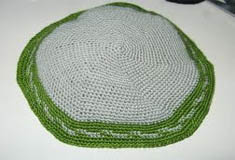
Unfortunately, in today’s world, many hide their Jewish identity. While most people are proud to be Jewish and openly show it in public, sometimes one may find themselves in a situation where doing so could put them at risk. The question of wearing a kippah in such places is particularly challenging. Obviously, if one fears for their life, they should remove their kippah, as pikuach nefesh (saving a life) overrides the mitzvot. However, sometimes a person is in a situation that does not seem immediately dangerous, yet they are unsure if circumstances could quickly become hazardous. In such cases, if someone finds themselves in a potentially dangerous situation and fears hostility because of the kippah on their head, they should cover their head with a hat that does not resemble a Jewish hat; if they do not have such a hat, they should remove the kippah and go without head covering until they reach a safe place.
Let’s summarize the law of head covering and its significance. The obligation is derived from the Talmud (Shabbat 156b), which recounts that astrologers told the mother of Rav Nachman bar Yitzchak that her son would grow up to be a thief. She resolved to raise him to always cover his head. One day, while Rav Nachman was in the field, his head covering fell off, and upon seeing dates on a palm tree above him, he immediately felt the urge to steal them. From this, it is learned that covering the head fosters fear of Heaven.
The Rambam (Hilchot De’ot 5:6) explains that covering the head is a matter of modesty. In Moreh Nevuchim (3:47), he writes that the great sages refrained from uncovering their heads so that the Divine Presence would hover over them.
Poskim derive from this story that wearing a kippah is not a strict obligation but a matter of piety- Minhag Chasudut (Igrot Moshe, O. C. 4:2).
However, the Taz (O. C. 8:3) rules that today there is a communal obligation to cover one’s head, since non-Jews commonly walk with uncovered heads, and to do the same violates “You shall not follow the practices of the nations.” To explain this: although gentiles sometimes wear hats, they make a point of removing them as soon as they meet someone, enter a courtroom, attend meetings, or enter a church, as a gesture of respect. We, however, do the opposite, deliberately keeping our head covering on.
Rav Ovadia Yosef also rules that covering the head today is a communal obligation, as it visibly distinguishes someone who serves Hashem from someone who does not. Because today’s custom is that religious people who observe Torah and mitzvot wear a kippah, walking without a head covering can create the impression that one is not observant. Therefore, one must wear a kippah to avoid suspicion.
Regarding employment, Rav Moshe Feinstein was asked about a person whose potential employer requests removal of the kippah. He ruled that it is permitted to remove the kippah, as according to most opinions, head covering is only a matter of piety, and financial coercion allows leniency.
Although some authorities were stringent for those who would remain without head covering all their lives (Ba’er Moshe; Shvivi Esh, Chukat Eikev), anyone in danger should remove the kippah temporarily without risking themselves.
Now, of course, if a situation like this arises, it must be carefully evaluated to determine whether the person can find employment elsewhere with respect for their way of life. Nevertheless, we can conclude from this that someone in actual danger is certainly permitted to remove the kippah temporarily until reaching a safe place.
Similar ruling we find in event that one finds himself in a dangerous place and he is asked straight out whether he is a Jew. A person may not say that he is a non-Jew, even to save himself from being killed. This applies when their intention is to make him abandon his faith. However, if their intention is unrelated to religion, and he fears for his safety, he may answer that he is not Jewish.
The Shulchan Aruch (Yoreh De’ah 157:2) writes: “It is forbidden for a man to claim that he is an idolater so that they will not kill him”
The Sefer HaYirah of Rabbeinu Yonah states that if they say to you, “You are a non-Jew,” you must respond, “I am a Jew.”
Rav Yosef Shalom Elyashiv explains (Ashrei Ha’ish, Y. D. ch. 10, 6) that this applies only when they seek to kill him unless he converts, as the Rosh writes (Avodah Zarah 2:4): “Certainly, by saying that he is a non-Jew, he is admitting to their religion and accepting their god.”
However, if someone enters a hospital where the staff is hostile toward Jews, and in order to receive proper medical care he says he is not Jewish, it is permitted in a situation of danger to life, because their intent is not to force him to abandon his religion.
The Shulchan Aruch further writes that during times of persecution, it is permitted to change one’s clothing so that others will not recognize him as a Jew, since he is not verbally identifying as an idolater.
Let’s summarize the law of head covering and its significance. The obligation is derived from the Talmud (Shabbat 156b), which recounts that astrologers told the mother of Rav Nachman bar Yitzchak that her son would grow up to be a thief. She resolved to raise him to always cover his head. One day, while Rav Nachman was in the field, his head covering fell off, and upon seeing dates on a palm tree above him, he immediately felt the urge to steal them. From this, it is learned that covering the head fosters fear of Heaven.
The Rambam (Hilchot De’ot 5:6) explains that covering the head is a matter of modesty. In Moreh Nevuchim (3:47), he writes that the great sages refrained from uncovering their heads so that the Divine Presence would hover over them.
Poskim derive from this story that wearing a kippah is not a strict obligation but a matter of piety- Minhag Chasudut (Igrot Moshe, O. C. 4:2).
However, the Taz (O. C. 8:3) rules that today there is a communal obligation to cover one’s head, since non-Jews commonly walk with uncovered heads, and to do the same violates “You shall not follow the practices of the nations.” To explain this: although gentiles sometimes wear hats, they make a point of removing them as soon as they meet someone, enter a courtroom, attend meetings, or enter a church, as a gesture of respect. We, however, do the opposite, deliberately keeping our head covering on.
Rav Ovadia Yosef also rules that covering the head today is a communal obligation, as it visibly distinguishes someone who serves Hashem from someone who does not. Because today’s custom is that religious people who observe Torah and mitzvot wear a kippah, walking without a head covering can create the impression that one is not observant. Therefore, one must wear a kippah to avoid suspicion.
Regarding employment, Rav Moshe Feinstein was asked about a person whose potential employer requests removal of the kippah. He ruled that it is permitted to remove the kippah, as according to most opinions, head covering is only a matter of piety, and financial coercion allows leniency.
Although some authorities were stringent for those who would remain without head covering all their lives (Ba’er Moshe; Shvivi Esh, Chukat Eikev), anyone in danger should remove the kippah temporarily without risking themselves.
Now, of course, if a situation like this arises, it must be carefully evaluated to determine whether the person can find employment elsewhere with respect for their way of life. Nevertheless, we can conclude from this that someone in actual danger is certainly permitted to remove the kippah temporarily until reaching a safe place.
Similar ruling we find in event that one finds himself in a dangerous place and he is asked straight out whether he is a Jew. A person may not say that he is a non-Jew, even to save himself from being killed. This applies when their intention is to make him abandon his faith. However, if their intention is unrelated to religion, and he fears for his safety, he may answer that he is not Jewish.
The Shulchan Aruch (Yoreh De’ah 157:2) writes: “It is forbidden for a man to claim that he is an idolater so that they will not kill him”
The Sefer HaYirah of Rabbeinu Yonah states that if they say to you, “You are a non-Jew,” you must respond, “I am a Jew.”
Rav Yosef Shalom Elyashiv explains (Ashrei Ha’ish, Y. D. ch. 10, 6) that this applies only when they seek to kill him unless he converts, as the Rosh writes (Avodah Zarah 2:4): “Certainly, by saying that he is a non-Jew, he is admitting to their religion and accepting their god.”
However, if someone enters a hospital where the staff is hostile toward Jews, and in order to receive proper medical care he says he is not Jewish, it is permitted in a situation of danger to life, because their intent is not to force him to abandon his religion.
The Shulchan Aruch further writes that during times of persecution, it is permitted to change one’s clothing so that others will not recognize him as a Jew, since he is not verbally identifying as an idolater.





הוסף תגובה
עוד מהרב שי טחן
עוד בנושא הלכה